
| | (Your shopping cart is empty)
|
|
 |
|
|
Speech Privacy Systems
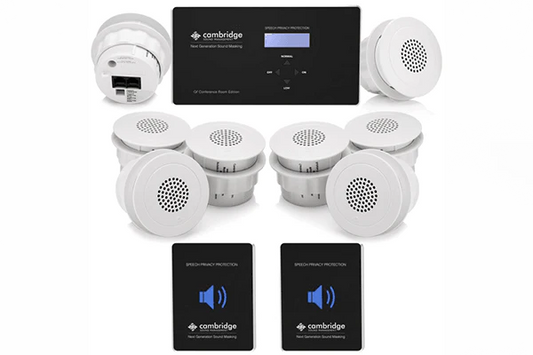
Doctors, health care professionals, government contractors and institutions, and any corporate setting where speech privacy is a concern should consult with experts in sound masking to insure that the privacy needs are met. Many offices are using technology which include office white noise such as a speech privacy system. These privacy systems are used for sound masking and to curb the ability for others to hear private and confidential conversations. It is possible that breeches in speech privacy may include the air conditioning ventilation tubing being used by a potential eavesdropper.
|
|
Cubicle Privacy
Sound masking and white noise refer to low level background noise. When this type of noise is added to an office environment, speech and noises are less noticeable. The term "white noise" is widely used when referring to speech privacy systems or sound masking systems such as the Voice Arrest or others.Many office environments use cubicles or "cubes" which lead to increased noise and distractions. Sound masking and speech privacy systems are introduced to reduce noise and speech distractions from surrounding areas, thereby improving worker concentration and performance.
Private Office Conversations
The purpose of sound masking, office white noise and speech privacy systems are to insure the confidentiality of conversations. It prevents people at water coolers, in the hallways or in the common areas from overhearing potentially sensitive information through the open doorways or closed doors of nearby offices.
Oral Privacy - HIPAA
Oral privacy and speech privacy systems actually makes speech "unintelligible." That is, if each of us can't understand what the other is saying, we effectively have sound masking. White noise provides barely perceptible "low level noise", so that speech is rendered unintelligible. It's actually designed to sound like typical office air conditioning noise, so that you won't notice it. In other words, it's a gentle "whooshing" sound.Protection of Oral Privacy is necessary to comply with HIPAA regulations. The language in the HIPAA regulations makes specific reference about healthcare providers needing to do what is reasonable and necessary to protect a patient's oral privacy. Specific examples are cited with respect to pharmacy counters or check-in counters for waiting rooms. It is unnecessary to construct sound proof rooms for sound masking and speech privacy. Speech privacy systems present a wondeful alternative. Sound and speech privacy masking systems within a healthcare environment can help satisfy the condition of improving speech privacy to the same extent provided by a partition or wall.
|
|
|
|